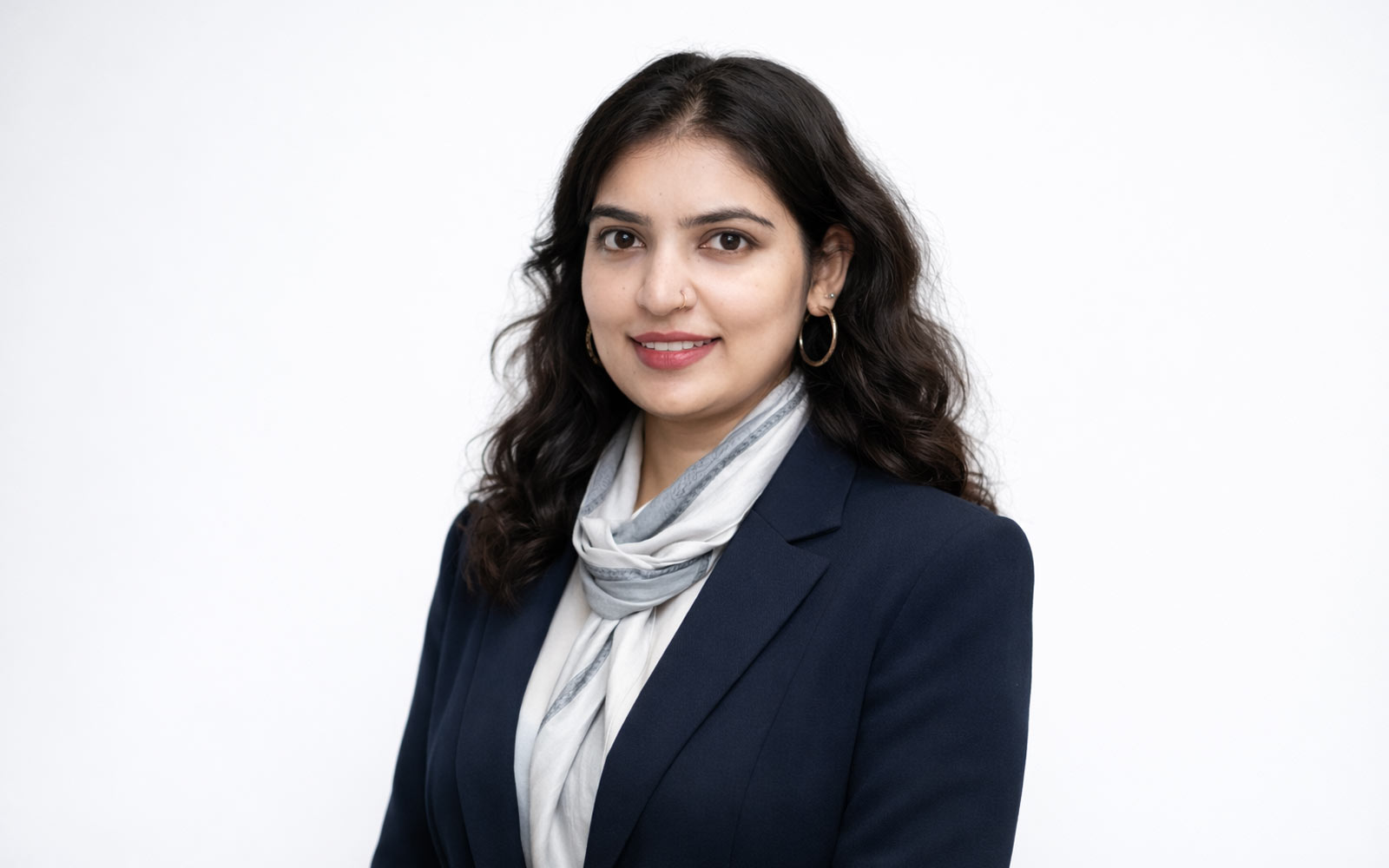
My name is Rashmi Siddalingappa, and I am originally from Bangalore, India, often called the “Silicon Valley of India,” and I am excited to bring my international research and teaching experience to the University
Before joining York St John, I worked as an Assistant Professor at a private university in Bangalore. Prior to that, I was a Postdoctoral Fellow at West Virginia University, USA, where I contributed to NASA- and NSF-funded projects, including the Living With a Star and ANSWERS awards. During this time, I collaborated with Professors and researchers from the University of California, Los Angeles (UCLA), Los Alamos National Laboratory, the University of Arlington, Texas, Bay Area research institutions, and the University of Michigan, working on projects in space weather, ring current modelling, and radiation prediction on aircraft.
I am also a recipient of the prestigious NPDF Award from the Department of Science and Technology (DST) under the SERB Scheme, Government of India. I carried out research on precision medicine for cancer at the Indian Institute of Science, one of India’s top research institutes. I received my PhD in Computer Science in 2018, with a focus on Natural Language Processing (NLP), and I have expertise in semantic and phonetic analysis.
My research primarily focuses on the applications of AI and Machine Learning in biomedical and space weather fields, bridging computational methods with practical scientific challenges. I joined York St John University in August 2025 in the Department of Computer and Data Science, and I am very happy to be a part of the York St John team and look forward to contributing to both teaching and research while collaborating and sharing knowledge with colleagues and students.
At YSJ, as the module director for the BSc (Hons) Computer Science programme, I predominantly teach across all years of the undergraduate course, as well as the master's programme. I teach on specialist modules focused on programming, problem-solving, Artificial Intelligence, Machine Learning and database systems. Some of the modules include:
- Problem Solving Techniques through Programming (LDC6001M)
- Artificial Intelligence, Fintech, Generative Technologies (LDC6003M)
- Database Systems and Security (LDS7002M)
At the postgraduate level, I currently supervise dissertation projects and provide research guidance to students, supporting their development in computational thinking and applied research skills.
Over the years, I have supervised undergraduate and postgraduate dissertations, guided independent research projects, and mentored students in developing practical, analytical, and research skills. I have also developed innovative teaching methods to engage students, including laboratory sessions, seminars, workshops, guest lectures, and project-based learning activities.
I am actively involved in evaluating student performance through assignments, examinations, and project assessments, providing constructive feedback to support their academic and professional growth. In addition, I participate in curriculum design, departmental activities, quality assurance processes, and student-focused initiatives to ensure a high standard of teaching and learning.
My teaching philosophy emphasizes hands-on learning, critical thinking, and real-world application, aiming to prepare students for successful careers in technology and research-driven fields while fostering a collaborative and inclusive learning environment.
My research primarily focuses on the applications of Artificial Intelligence and Machine Learning in biomedical and space weather domains, bridging computational methods with real-world scientific challenges. I have authored 30 journal papers, 25 conference papers, and 3 book chapters, reflecting my contributions to both theoretical and applied research.
During my postdoctoral tenure, I developed and implemented novel machine-learning algorithms for space weather modeling under major NASA and NSF-funded projects, analyzing complex data sets and creating predictive models for phenomena such as ring current dynamics and radiation exposure. In parallel, I have conducted research in precision medicine under NPDF award, designing algorithms to analyze biomedical data and uncover insights relevant to cancer treatment and personalized healthcare.
I actively mentor and supervise graduate and doctoral students, guiding them through experimental design, data analysis, and the publication process. My work also involves grant writing, collaboration with interdisciplinary teams, and presenting research findings at international conferences and seminars. I am committed to advancing both fundamental and applied research while fostering a collaborative environment that encourages innovation, critical thinking, and impactful scholarship.
I am a member of IEEE and AGU. I serve on the reviewer panels of several major Scopus-indexed and SCI journals, contributing to the peer-review process and ensuring the quality of published research.