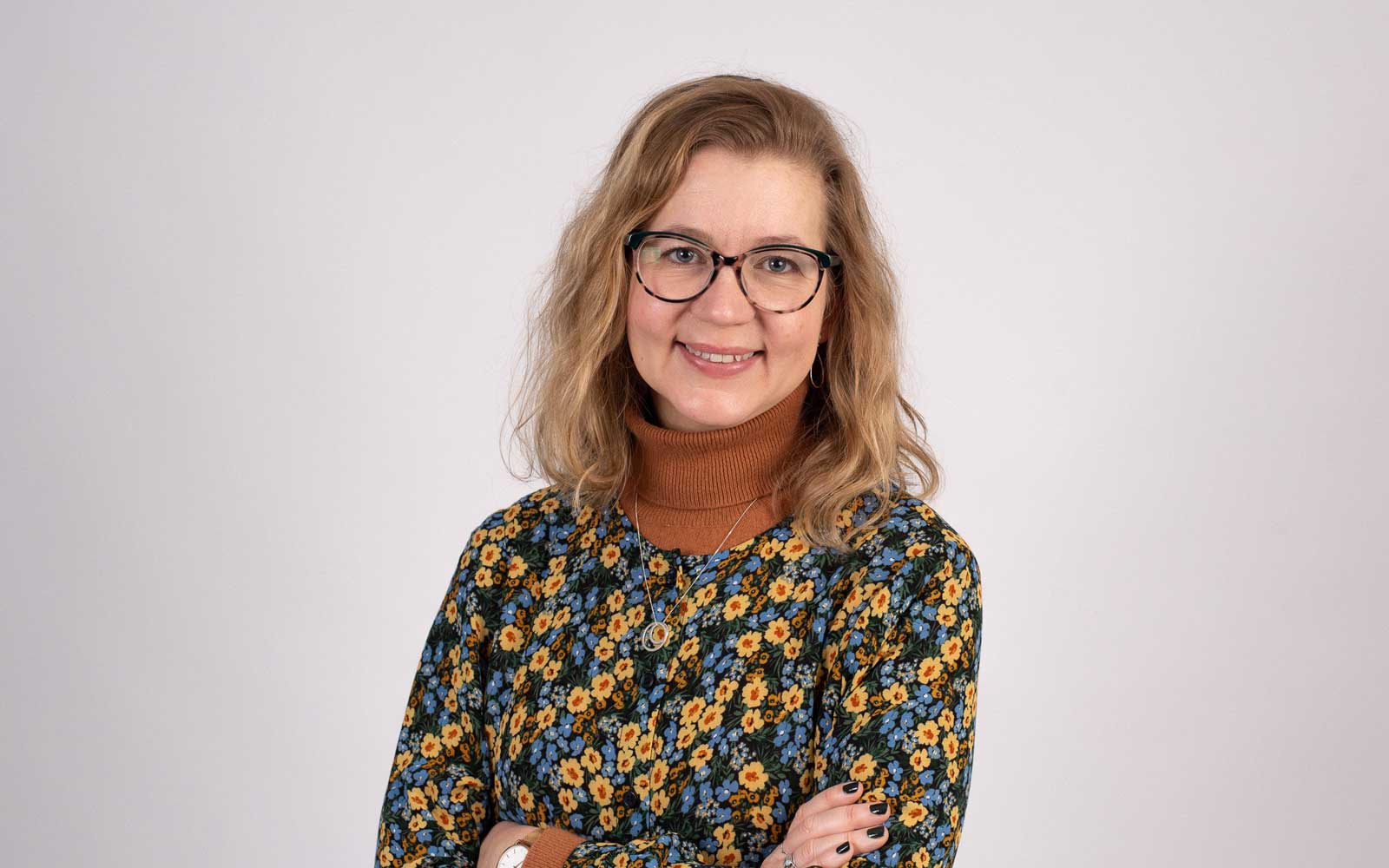
I am a Senior Lecturer in Psychology, with a background spanning psychology, animal behaviour and biological sciences.
I completed my PhD at the University of Birmingham in 2014, where I investigated the ability of great apes and children to plan their actions in problem-solving tasks. Following this, I held postdoctoral research positions in developmental and comparative psychology at Cardiff University, the University of Toronto, and the University of St Andrews. Prior to joining York St John University in 2022, I spent 3 years as a Lecturer in Psychology at Birmingham City University.
I currently teach on the following modules:
- PSY5002M: Infant and Child Development (Module Lead)
- PSY6034M: Origins of the Human Mind (Module Lead)
I also supervise student research projects/dissertations at undergraduate and postgraduate levels.
I'm interested in the developmental and evolutionary origins of cognitive abilities, particularly those implicated in problem-solving. My research spans the fields of developmental, comparative, and cognitive psychology. I use behavioural experiments that involve individuals interacting with physical puzzles as well as computer-based tasks and eye-tracking. I have investigated a range of cognitive abilities in diverse groups, including planning in orangutans, intuitive statistics in capuchin monkeys, grasp of gravity in dogs, and experience of time in children.
Some current research projects include:
Mental simulation in problem-solving: To what extent do children use mental simulation as a problem-solving strategy? How does the capacity to mentally simulate alternatives change across development? Are individual differences in executive functions predictive of children's tendency to simulate? (Funded by a British Academy/Leverhulme Trust Small Research Grant, 2021-2024, and an Experimental Psychology Society Small Grant 2025-2027).
Social and causal reasoning: What cognitive mechanisms underpin the development of children's tendency to faithfully copy even unnecessary actions (overimitation)? Why do social cues increase overimitation? Do young children grasp that sequences of actions can be causal?
I have a keen interest in the Open Science movement and strive to make my research practices transparent and reproducible, via pre-registration of studies, open sharing of data and analysis code, and posting of preprints for timely dissemination.
I lead the Child Development Research Group at YSJ.
Recent publications
- Fellow of the Higher Education Authority (FHEA)
- Member of the Experimental Psychology Society
- Member of the Economic and Social Research Council Peer Review College
- External Examiner for PhD Theses (University of Queensland, Australia; University of St Andrews, UK)
Ad hoc journal reviewer: American Journal of Primatology, Animal Behavior and Cognition, Animal Cognition, Behavioural Processes, Biology Letters, Cognition, Cognitive Development, Current Biology, Current Psychology, Developmental Psychology, Journal of Comparative Psychology, Journal of Experimental Child Psychology, PeerJ, Scientific Reports
Conference peer reviewer: Cognitive Science Society Annual Meeting, Budapest CEU Conference on Cognitive Development