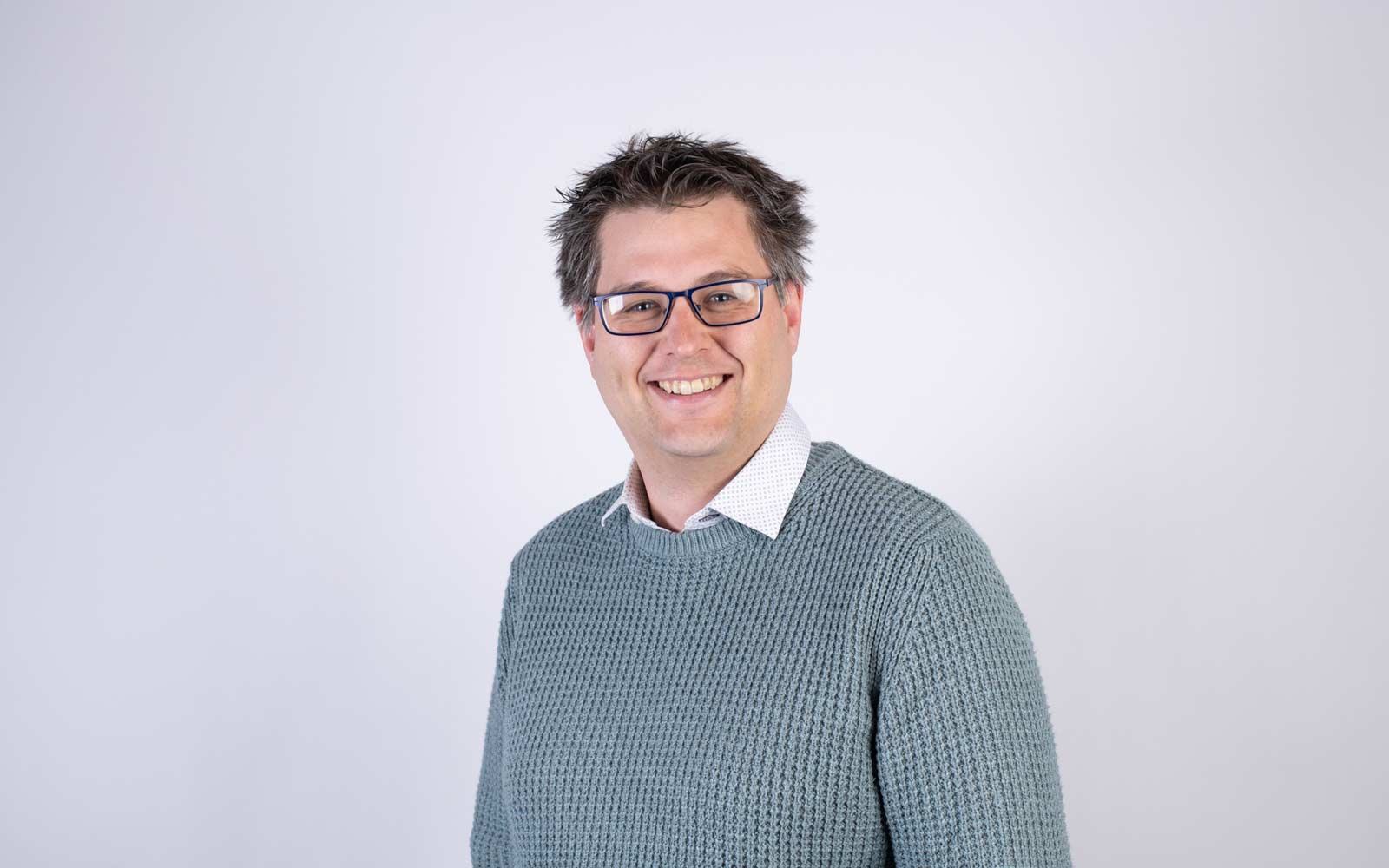
I am an applied Physicist with research experience in both academia and industry. I studied Physics at the University of Warwick (2006 to 2010), before staying to complete my PhD under the supervision of Prof. Steve Dixon. The PhD marked the beginning of my focus on non-destructive testing, with a particular focus on the use of ultrasonic waves. After a post-doc in collaboration with IIT Madras in India, I moved into industry with Tribosonics, a high-tech scale-up company in Sheffield developing unique sensing technologies to drive digital transformation in a range of industrial sectors. I am currently drawing on this range of experience as a Lecturer in Data Science at York St. John.
My research themes are based on applying physics-based concepts to solving industrial sensing problems, with a particular focus on ultrasound. This includes creating analytical and numerical models to assess how the physical properties of the object under test will change to different physical stimuli. I also have a strong background in converting acquired data into actionable insights, with a focus on digital signal processing.
I am lecturer on the Data Science Degree Apprenticeship course, and I am currently module lead on the following modules:
- DSC4005M - Analysis and Optimisation
- DSC5004M - Object Orientated Programming
- DSC5006M - Worked-based Project
My research is primarily focused on non-destructive testing, especially the use of ultrasonic waves. These mechanical waves can give insight into the internal states of structures, either for traditional crack detection or for measuring properties of the object, such as temperature, composition, stress, etc. In particular:
- Ultrasonic Arrays: Using the flexibility afforded by phased arrays to develop bespoke measurements, including ultrasonic image formation algorithms. Development of new array techniques, drawing on diffraction.
- Signal processing and data science: Ultrasonic data tends to be high-dimensional, with potentially thousands of data points per measurement. Techniques can be developed to clean acquired data, and process it in the time or frequency domain into a meaningful metric before using a range of data science methods to draw robust inferences about that state of objects and suggest remedial actions to extend their operational lifetime.