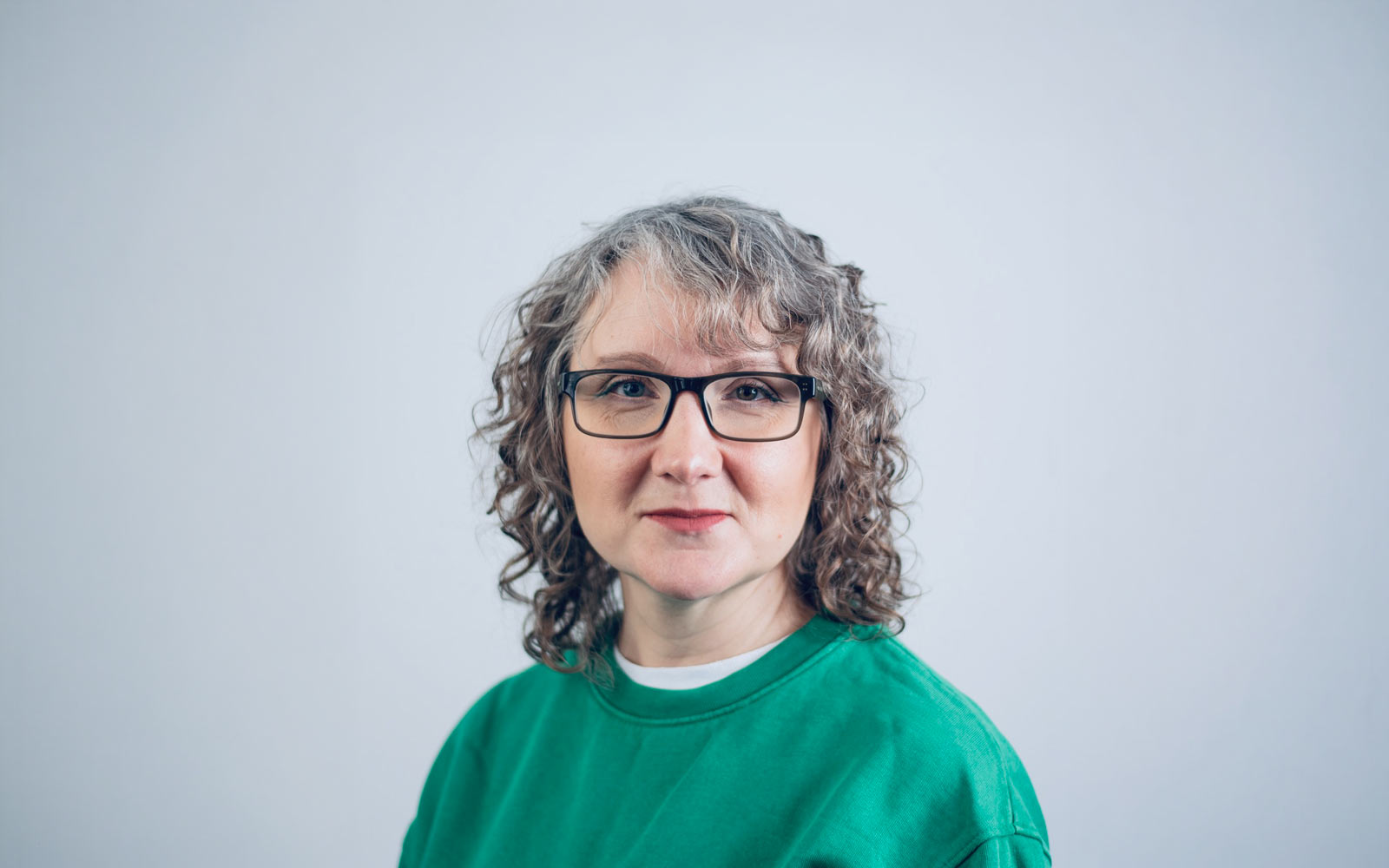
I’m a political sociologist and scholar of gender with interests in feminist theory and politics, the body and violence, and racial capitalism. I’ve pursued these interests through various topics including sexual violence, sex work, reproduction, and institutional cultures. All this work has involved different forms of engagement and collaboration, locally, nationally and internationally.
I was educated in Teeside, and then in Somerset at my local comprehensive. I wanted to be a dancer and did three years' professional training at Elmhurst Ballet School on a local authority scholarship, before it became obvious I wasn't going to make it and needed to find a different job instead. So I applied for, and got into, Manchester University to do Politics and Modern History. I probably wouldn't have gone to university if I'd had to pay fees. I also probably wouldn't get in to university now, as I only have two A-levels.
Before becoming an academic I had lots of different jobs. I worked as a waitress in restaurants and cafes and behind bars in pubs and nightclubs. I was a painter and decorator. I worked in the Body Shop. I did admin jobs in many different companies and organisations. I danced on a podium and sang in bands. I got into academia by accident - Manchester University approached me to do a funded masters, and then put me in touch with my PhD supervisor at Cambridge who helped me get funding for that. If I hadn't been able to get funding it wouldn't have occurred to me to do a PhD - I'm the first person ever in my family to do one.
I have had four academic jobs. Before starting at York St John University I was Professor of Sociology at Newcastle University between 2021 and 2025. Between 2005 and 2021 I was Director and then Professor of Gender Studies at Sussex University (starting on a temporary contract which was made permanent eventually). Before that, I was an hourly-paid lecturer at Brighton University.
At York St John I am currently teaching on the Politics programme, focusing on political theory and political sociology. I supervise a number of PhD students in areas related to my research interests, and I am accepting new applications.
At Newcastle I led the final-year dissertation, co-led the second-year methods module Researching Social Life, and led the first year core module Politics and Society. At MA level I taught a module called 'Gender, Violence and Social Change' and supervised dissertations. At Sussex University I taught at all levels throughout the Gender Studies and Sociology curriculum, and taught pretty much every module at one point or another.
In my classroom, I practice what bell hooks calls ‘engaged pedagogy’. This works towards the intellectual and personal growth of students and foregrounds the notion of praxis, which involves both reflection and action. I aim to challenge the received 'canon', to bring politics into the classroom, and to encourage research for social change. My principles for teaching include validating student knowledge and experience, an emphasis on dialogue and not ‘debate’, recognising multiple inequalities and power relations, developing self-awareness, and ‘calling in’ rather than ‘calling out’ when conflicts arise.
I share many of my teaching resources online for colleagues and students to use - my personal website hosts a range of resources including a set of introductory lectures on feminism, an advanced gender theory syllabus (with suggested classroom activities), and a set of handouts and infographics for dissertation students and their supervisors. Sharing resources is a political choice that allows me to resist the commodification of knowledge and the territorialism over ‘intellectual property’ that universities sometimes have.
I am a Senior Fellow of the Higher Education Academy.
I have published four books and almost seventy other academic outputs including journal articles, book chapters, and research reports. The big ongoing questions for my work concern: (1) the relationships between heteropatriarchy, racial capitalism and gender-based/sexual violence; and, (2) how mainstream feminist theory and activism can divest from racial capitalism and become truly transformative.
My fourth book, released in 2026, is called Sexual Violence in Racial Capitalism (Manchester University Press). The book contains what it says on the tin – it focuses on what sexual violence does in racial capitalism. By that, I mean: what is the role of sexual violence as racial capitalist systems corral (or kidnap), mould (conscript, force), use (wear out, dilapidate), and discard (dispatch, destroy) the workers they require? I examine how both sexual violence and sexual fear enclose bodies and populations, support the extraction of surplus value, facilitate the expropriation of all kinds of resources, and dispose of the unwanted. Violence is a basic means of moving from difference to division to domination, and this violence is often sexualised. Stoking fear of violence - also often sexualised - is a powerful tool of misdirection and manufacturing consent.
The book brings together historical and contemporary case studies including the Early Modern witch hunts, reproductive accumulation in transatlantic slavery, sexual harassment in drop-shipping warehouses and sweatshops, far-right Islamophobia and ‘anti-gender’ activism, the digital manosphere, and the Gaza genocide. Throughout, the analysis explores how both sexual violence and sexual fear create social control and surplus value. In what I call the coloniality of sexual violence, acts of sexual violence and ideas of sexual threat are situated within an analysis of gendered and raced property relations and the split colonial/modern psyche. Fantasies of sexual danger represent the violence of coloniality turned inside out: this is a fundamental reason why fear of revolution is fear of rape. This also suggests, though, that revolution is always imminent: violence is necessary because power is incomplete.
My third book Me, Not You: the trouble with mainstream feminism (published by Manchester University Press in 2020) explored how mainstream feminism around sexual violence tends to pull the levers of oppressive systems rather than building alternatives. In addressing this, I grounded established critiques of how class-privileged white women dominate feminism, in the social and cultural history of white womanhood. Drawing on Black and abolitionist feminist theory, I argued that mainstream feminism, with its focus on criminal punishment and institutional discipline, effectively treats Black and other marginalised people as disposable.
The book also looked at some other Others of mainstream feminism – sex workers and trans people. I argued that branches of mainstream feminism can become reactionary, turning a focus on the wounded body into deep defensiveness. This positions other liberation politics as threatening, especially when it’s challenging, and trans women especially are constructed as a threat. In contrast, I argued that a truly transformative feminism requires what Angela Davis calls an ‘intersectionality of struggles’ in which we’re comrades and not competitors.
This analysis was shaped by my experience of being a scholar-activist in the movement around sexual violence against students since 2006. With NUS, I was involved in the first national survey of sexual violence against students and I led the report on ‘lad culture’ that helped catalyse a movement in the UK. I’ve focused particularly on how sexual violence is framed by the neoliberal institution and in 2016 I co-founded the Changing University Cultures collective, which conducted projects at several UK universities. I also co-led the pan-European Universities Supporting Victims of Sexual Violence project, which designed, piloted and evaluated disclosure training programmes for over a thousand staff in 21 different institutions in the UK, Spain, Greece, Italy, Latvia and Serbia.
My work in universities has theorised how marketised, competitive cultures create the conditions for violence by giving certain individuals a lot of power and value, and tend to prioritise reputation over staff and student wellbeing. I have introduced the concept of ‘institutional airbrushing’, which takes two main forms: concealment and erasure. Either issues are minimised, denied or hidden, or when this isn’t possible, the perpetrator is ‘airbrushed’ from the institution and it’s made to appear as if they were never there. This stabilises the system - all the institution needs to do to preserve itself is remove the blemish. The malaise remains, and the blemish tends to reappear elsewhere. I’ve consistently challenged approaches to violence that treat the institution as neutral. I draw from abolitionist university studies, which positions the university as key to the capitalist, colonial world-making project. As Audre Lorde famously said, ‘the master’s tools cannot dismantle the master’s house’.
In all my work, I try to create tools that can support what Ruth Wilson Gilmore calls 'complexly thoughtful action.' I situate my writing practice within Elaine Castillo’s scopious definition of reading: we read books, she writes, in order to help us read the world we live in. Moreover, she reminds us, ‘if we don’t figure out a different way to read our world, we’ll be doomed to keep living in it’. My research and writing also draws on and informs my teaching - my students educate me just as much as I educate them, and I have always seen social justice pedagogy as fundamental to social change.
Recent publications
I have been involved with the following professional organisations and networks:
- Steering committee, SexGen North network (2024-date)
- Co-convener, Abolition Feminism for Ending Sexual Violence (2021-date)
- Co-Chair, Feminist Gender Equality Network gender-based violence group (2021-23)
- Patron, Association of Gender Studies in Africa (2019-date)
- Co-Chair, LEX (Law, Gender and Sexuality) Violence Against Women network (2021-2022)
- Founder and co-convenor, Safe Studies Network (now Universities Against Gender-Based Violence) (2013-16)
- HEFCE nomination process for REF 2014 panels/sub-panels and consultation on draft criteria and working methods
- Chair, Feminist and Women’s Studies Association (now Feminist Studies Association) UK and Ireland (2009-12)
- ESRC/BSA international benchmarking of UK sociology, Women’s/Gender Studies panel (2009)
- Strategic Planning Committee, US National Women’s Studies Association (2004)
I am currently on the editorial board fot the Journal of Gender Studies. I have previously served on the International Advisory Board for Feminist Theory, the Ediorial Board for Gender and Education, and the Associate Editorial Board for Sociology.
I have collaborated with many NGOs, government departments, and activist and community groups in my research, locally, nationally and internationally. These include local Rape Crisis centres and women's refuges, End Violence Against Women, the Sex Worker Open University, Abolitionist Futures, the National Union of Students, CEPS Projectes Socials in Barcelona, and Marta Resursu Centrs Sievietem in Latvia. I have also supported policy development in partnership with organisations such as Brighton & Hove City Council, the Office of the Independent Adjudicator, the Office for Students, HEFCE and Universities UK.