Learning and teaching
Decolonisation in theory and practice: Reading and resources
The readings and resources below provide a critical foundation from which to approach decolonisation within higher education (HE).
/prod01/yorksjacuk/media/content-assets/safe-images/1600-x-1000/Discussing-Decolonisation---Reading-and-Resources.jpg)
Whether you are new to decolonising work, unsure about its relevance to your field or already deeply invested, there is always scope for developing a deeper understanding of the key concepts, texts, debates and politics of decolonisation.
Although far from exhaustive, the readings and resources listed below provide a critical foundation from which to approach decolonisation within and beyond the context of higher education.
So far, we have focused on online resources, books and special issues, rather than individual journal articles. However, these pages are being continually developed and updated, and will also include discipline-specific recommendations in time.
Please note that texts are currently listed alphabetically by authors' or editors' first names and organised into loose thematic groupings. Some texts and authors will therefore appear in multiple sections or subsections, whilst others may be found in unexpected places, reflecting the unbounded nature of their ideas and of knowledge more broadly.
Download the list in full: Decolonisation - Recommended reading and resources (PDF, 0.5MB)
York St John staff and students can also access some of the texts on our dedicated Library reading list, or explore them in more depth by joining our Discussing Decolonisation Reading Group.
If you would like to recommend any readings or resources, please follow the link under 'Get Involved', below.
/prod01/yorksjacuk/media/content-assets/safe-images/irregular-sizes/Migration-Studies-and-Colonialism-book-cover.jpg)
Book of the Month
Migration Studies and Colonialism
By Lucy Mayblin and Joe Turner (Polity, 2021)
The history of migration is deeply entangled with colonialism. To this day, colonial logics continue to shape the dynamics of migration as well as the responses of states to those arriving at their borders. And yet migration studies has been surprisingly slow to engage with colonial histories in making sense of migratory phenomena today.
This book starts from the premise that colonial histories should be central to migration studies and explores what it would mean to really take that seriously. To engage with this task, Lucy Mayblin and Joe Turner argue that scholars need not forge new theories but must learn from and be inspired by the wealth of literature that already exists across the world.
Print copy available for York St John staff and students to borrow from the YSJ Library below.
Migration Studies and Colonialism (Wiley)
/prod01/yorksjacuk/media/content-assets/safe-images/irregular-sizes/We-Will-Arrive-Tomorrow-short-film-poster.jpg)
Film of the Month
We Will Arrive Tomorrow
Directed by Maria Galliani Dyrvik (Smau Media) 2016, 7m 43s
Through animation and actual recordings, this documentary tells the stories of people fleeing a war. Mahmad leaves Syria after his fiancée is killed by a bomb in Damascus. Rasha is 12 and hopes for a new and safe life in Europe. Odei dreams about the garden he had when Syria was heaven. Tossed around by smugglers and by the waves of the sea, their memories provide a safe haven. Facing fear, they stay close together. But what awaits them if they make it across the sea to Italy?
Production:
Maria Galliani Dyrvik (screenplay, directing, animation)
Anita Vedå (producer and animation)
Tommy Grov (illustration and animation)
Øyvind Rydland (sound)
Decolonisation in world history, theory and politics
Decolonisation in higher education
Exploring decolonisation through media and culture
Get involved

Recommend a text
If you have any readings or resources that you think should be added to the list, please complete our short form below to share your recommendations.

Join our reading group
York St John staff and students can also explore and discuss some of the key texts below by joining our Discussing Decolonisation Reading Group.
Attend an event
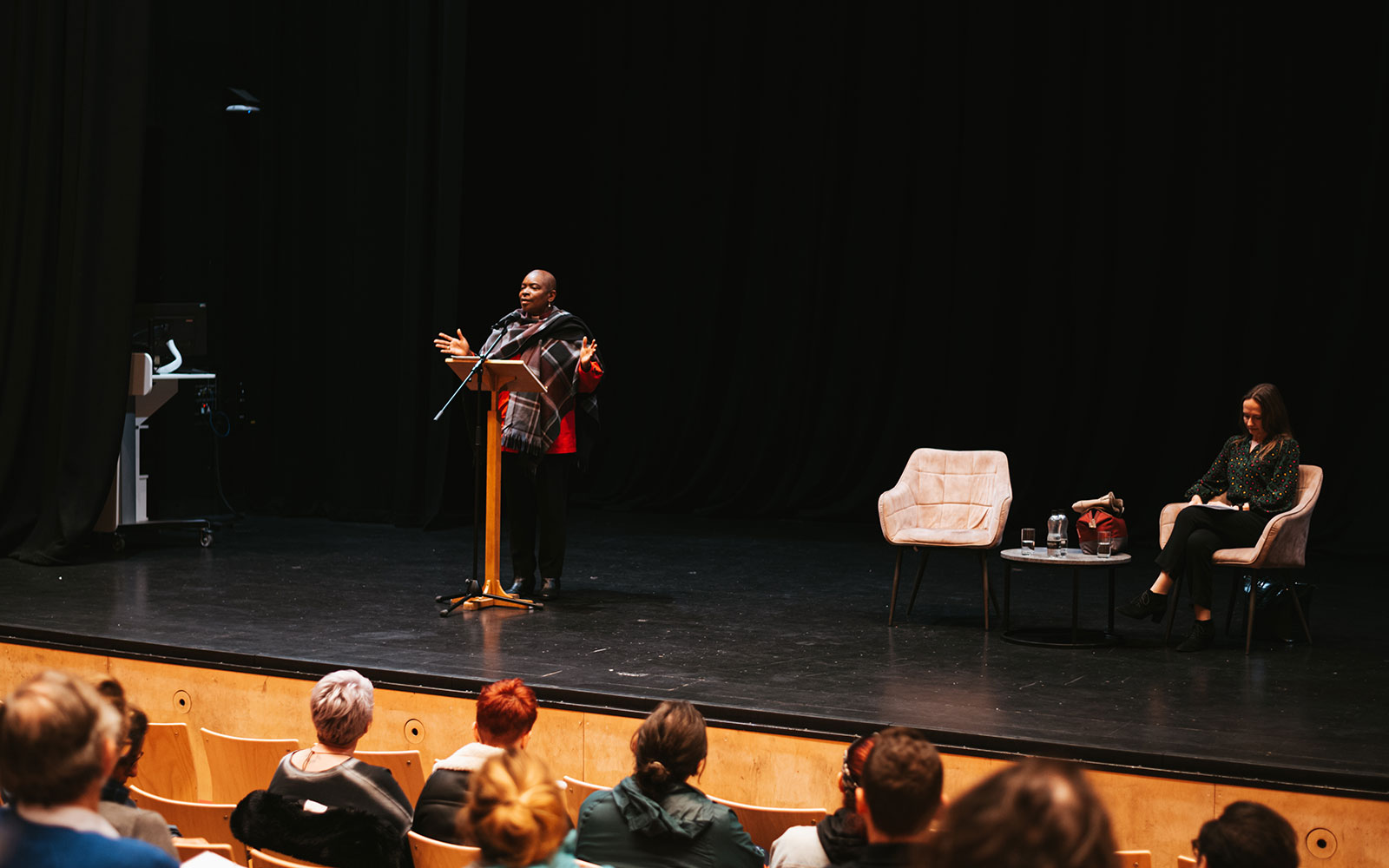
Attend an event in our Discussing Decolonisation public event series, hosted by the Teaching and Learning Enhancement team.